 Storyline & Sinker
VisibilityContent creation
Tired of Fighting for Google Rankings? How Huntsville and Madison Businesses Can Get Found in AI Search
If you run a business in Huntsville or Madison, Alabama, checking your Google position can become a frustrating habit. You update your business profile and ask customers for reviews, then search again to see the same competitors ahead of you.
It can feel as though being found depends on winning a few crowded spots.
AI search gives customers another way to discover your business. Someone can describe their situation, ask what to consider, and use the answer to research local providers. Your website can contribute useful information to that process.
To give your content that opportunity, publish answers to the questions people ask before hiring you. Support those answers with examples from your work, explain where you provide the service, and make the information easy to find on your website.
Your Google Maps position does not tell the whole story
In a September 2026 study of more than 200,000 local AI searches, BrightLocal found that business recommendations varied across AI platforms and repeated searches. Strong Google Maps visibility did not translate directly into the same visibility in AI answers.
A disappointing map position does not fully describe how customers might encounter your business through AI search.
There is still overlap. Google explains that its AI search features draw on its Search index and core ranking systems. Keep your website and Google Business Profile in good shape as you expand your approach. AI visibility takes work, and appearing in an answer is never guaranteed.
The opportunity is to make your expertise available when someone asks a question you are well qualified to answer.
People are using AI to research local businesses
In BrightLocal’s 2026 survey of 1,002 U.S. adults, 45% reported using AI tools for local business recommendations in the previous 12 months. These are national findings about reported use; they do not establish AI adoption in Huntsville or Madison.
The same research found that 97% of respondents who used AI for local recommendations at least sometimes checked those recommendations against real reviews.
For a service business, this suggests a useful role for content: help someone understand the decision, then give them something they can verify about your company.
A potential customer might learn which questions to ask, visit your website to examine your work, and read reviews before contacting you. Your content should help at each step.
Answer the question behind the search
“Best contractor in Huntsville” tells you the category and location. A homeowner comparing two estimates has a more specific concern: whether the proposals cover the same work and what might cost extra.
That concern gives you a stronger article topic. You can explain how to compare the proposals, show the relevant details, and help the reader prepare for a conversation with a contractor.
Here are examples of questions a local business could build content around:
| Business | Example customer question | Useful content to create |
|---|---|---|
| Remodeler serving Huntsville | “I have two kitchen-remodel estimates. How do I compare what is included?” | An explanation of scope differences, supported by a redacted estimate or a clearly labeled sample. |
| IT provider serving Madison | “What would a managed IT company handle for our office, and what would still be our responsibility?” | A service comparison explaining support coverage, response procedures, and client responsibilities. |
| Content company serving both cities | “Can someone create our business videos without needing me on camera every week?” | A walkthrough of a filming session, the preparation required, and examples of the finished content. |
Start with questions from your own sales conversations. Choose one that affects whether someone feels ready to hire you.
Give the main answer near the beginning. Then explain the details that could change it. A customer comparing estimates should be able to find your advice without first reading several paragraphs about your company’s history.
Make your local experience visible
The most useful Huntsville or Madison detail is often something you can demonstrate from work you actually performed.
For a real remodeling project, explain what the homeowner wanted and which condition affected the scope. Show the relevant photograph and describe what changed. If the owner remained in the home during construction, explain how that shaped the work.
For a business service, show what delivery looks like. A sample schedule, an explanation of the approval process, or a finished deliverable can help a prospective customer understand what they would be buying.
Identify the location when it adds context. If you travel to customers in Madison from a Huntsville base, explain how customers in both cities can work with you. Someone considering your service may need to know whether an on-site visit is included and which parts of the work can happen remotely. Put those details on the relevant service page.
Google’s helpful-content guidance emphasizes firsthand expertise, original information, and clear authorship. A useful question to ask before publishing is: what can a reader learn here from our actual experience?
Give your useful videos a written home
You probably explain parts of your service every week. Recording those explanations can turn that knowledge into content without requiring you to invent a new subject each time.
For example, a contractor could record an explanation of why two estimates differ. A short video could introduce the most common misunderstanding. A website article could explain the comparison in more detail, with an example readers can examine.
Write the article so someone can understand it without watching the video. Edit the spoken explanation for clarity, define unfamiliar terms, and add any qualifications the short version leaves out.


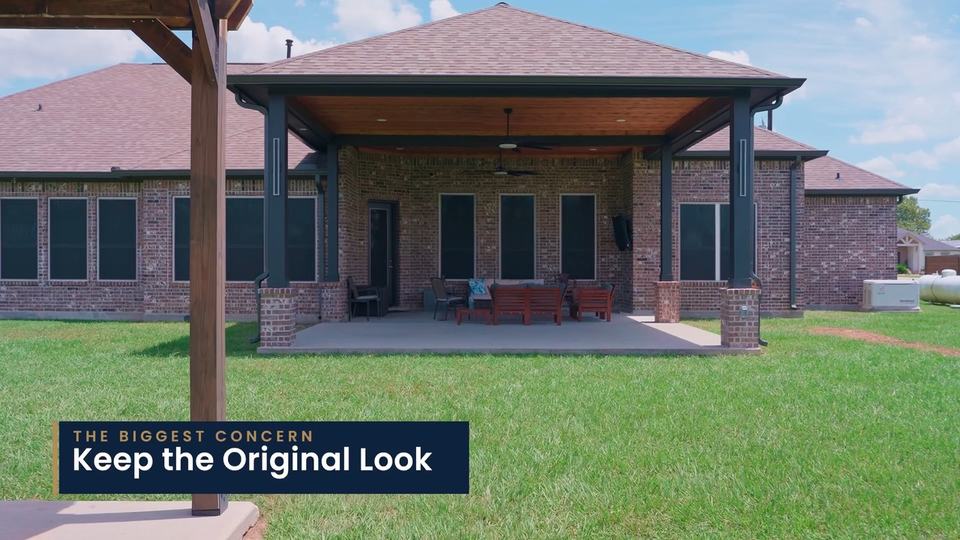
This is a practical approach for an owner who has limited time for marketing. An organized filming session can capture useful material for several formats. The article gives the fuller explanation a public page on your website.
Connect the answer to the service you provide
An article about comparing remodeling estimates should connect to your remodeling service page. An explanation of outsourced IT support should connect to the service it describes.
Use descriptive link text so people know what they will find. “Our kitchen remodeling process” is more useful than an unexplained “click here.” Your service page can also link back to the article where a prospective customer may need the extra explanation.
Google uses links to discover pages and understand their relevance. These connections also help a reader move from understanding a problem to evaluating your business.
Keep your business details clear across that journey. Your service area, contact information, and description of the work should agree with your current business profiles. Google’s local ranking guidance also recommends complete, accurate business information.
Ask your website provider to check access
Publish the article as a public webpage with readable text. It should be reachable from your Resources or Blog section and from relevant pages within the site.
Ask your website provider to check Google indexing and eligibility for its AI features, including the site’s Search generative AI setting. Google documents these requirements in its AI search guidance.
For ChatGPT search, have them review access for OpenAI’s OAI-SearchBot. That search control is separate from GPTBot, which concerns content that may be used for model training.
Once access is working, focus on whether the page gives a useful, credible answer to the customer’s question.
Measure whether the content helps people contact you
Being cited as a source and being recommended as a provider are different outcomes. Record which one you observe when checking AI answers.
Use a consistent set of relevant questions over time, and record the platform and date. A single appearance is one observation; it does not establish a permanent position.
Then look at whether visitors continue to your service page and start an inquiry. Compare the inquiries with the type of work you want to attract.
Ask new customers how they found you and what they read or watched before reaching out. Someone may discover your business through an AI answer and later search for your name, so referral data alone may not capture the whole path.
Start with something your customers already need to understand
Choose a question you answered during a recent estimate or consultation. Record your explanation and gather an example that supports it. Build a useful website answer around that material, then share a shorter version through your social content.
Transcript of the reel
“Patients that are really difficult to work on, you want that streamline — I mean, I don’t want to spend multiple appointments with somebody that’s hard to work on, hard to deal with. Any time you can take some steps and appointments away from that, it is very important to me. Being able to do these hybrid cases quickly is a big advantage.”
At Storyline & Sinker, our content creation process starts with customer research and a messaging plan. That helps us identify the questions your content should answer before we plan, film, and edit it. A scheduled monthly filming visit gives us time to capture those explanations and produce the content in your selected package.
The resulting material can also support written website content, with article writing and website publishing scoped separately.
If you are unsure where to begin, our diagnostic helps identify what needs attention first in your marketing.